By Dr. Chris Cormier, DC — EBOO Prime
Most advice on how to prepare for a procedure covers the conversation — what to ask, what to disclose. Very little of it covers the morning itself: what to put on, what to skip, and what to put in your bag.
That is a gap worth closing, because when people ask how to prepare for a procedure the practical details are the ones they actually get wrong, and almost all of them take a minute to fix.
This page completes a set of three. Questions to ask before a procedure is what to ask. What to tell your doctor before a procedure is what to say. This one is what to wear and what to bring.
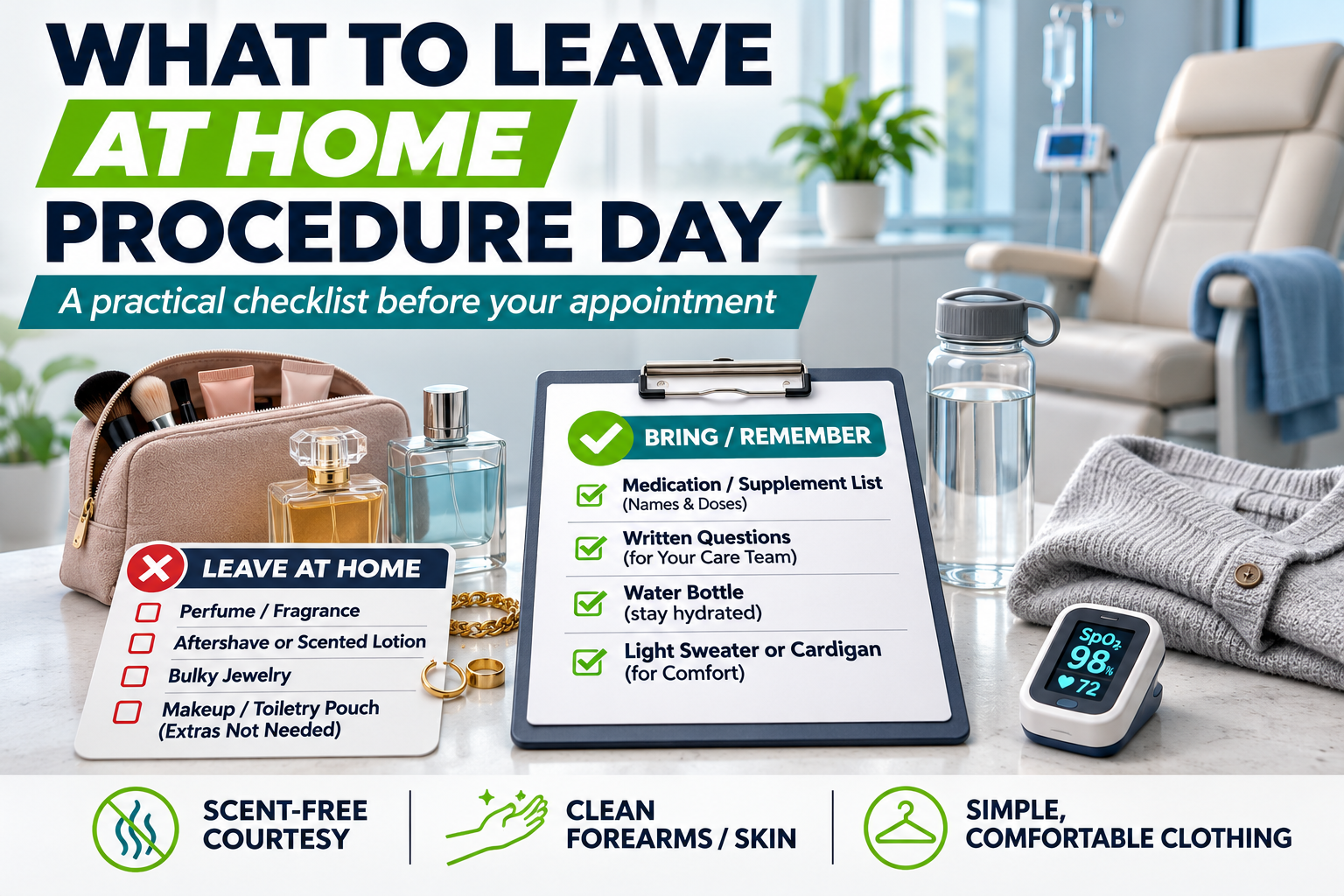
Perfume and aftershave, and the honest reason
Most clinical settings would rather you came unscented, and we are going to give you the real reason rather than the usual one.
We are not going to tell you your perfume is toxic. We do not know what is in it, you do not either, and as a claim it would be well beyond anything we could support.
The reason is the person in the next chair.
Fragranced products are a well-documented trigger of symptoms for a meaningful proportion of people, particularly those with asthma or other airway conditions, and those prone to migraine. In any clinical waiting room a disproportionate number of people are in exactly those groups, or are feeling nauseated, or are simply anxious and more sensitive to everything than they would normally be. Scent-free and scent-reduced policies are common across hospitals, schools and public buildings for that reason.
We should be fair about the state of the evidence, because it is contested. Some clinicians argue that blanket scent bans are poorly supported and that the research base is thinner than the policies imply. That is a reasonable position and we are not going to pretend otherwise.
But the case for coming unscented to a shared clinical room was never really an evidence argument. It is a courtesy argument, and that one is straightforward.
And one reason that is purely for your own benefit
Here is a consideration almost nobody raises, and it is the most interesting item on this page.
Scent forms associations faster and more durably than any other sense, because it reaches the brain’s emotion and memory centres by a more direct route than sight or sound. Our colleagues at The Nerve Health Institute explain the anatomy in why smells trigger memories.
Which has a practical consequence on procedure day. If you wear a scent you love to an appointment you are nervous about, you are pairing that scent with the nervousness. Most of the time nothing comes of it. Occasionally people find that a favourite fragrance has quietly acquired a clinical association they would rather it had not.
So: if you want to wear something, wear something you are indifferent to. Save the one you love for a better occasion. Body Charger covers the deliberate use of this effect in how to use scent for sleep — the same mechanism, pointed somewhere more useful.
Scented lotions and oils on your arms
This one is purely practical. Whatever a procedure involves, if it involves access to an arm, that skin needs to be clean, dry and free of product.
Heavy creams and oils interfere with skin preparation and with anything adhesive that needs to stay put. Nothing dramatic happens — you are simply asked to wash it off, which wastes a few minutes of your appointment for no reason.
Wash as normal, skip the body lotion on your forearms, and that is the whole instruction.
Nail polish: the advice that has actually changed
For decades the standing instruction was to remove all nail polish before any procedure, on the grounds that it interferes with pulse oximetry — the fingertip clip that measures blood oxygen saturation.
That advice is being revised, and we would rather tell you so than repeat an instruction out of habit. Experimental work presented at a European anaesthesia congress tested polishes of different colours and acrylic nails across varying physiological conditions and found none of them produced more than about one per cent variation in readings compared with untreated nails. The authors suggested hospitals should stop requiring removal.
Older pilot work had found small colour-dependent differences, so it is not entirely settled. But the size of the effect looks much smaller than the instruction implied.
What does affect those readings more is worth knowing, and it happens to be our subject:
- Cold fingers and poor peripheral circulation, which reduce the signal the device has to work with.
- Movement and shivering.
- Skin pigmentation, which regulators have formally flagged as an accuracy factor — a considerably more important issue than nail varnish and one that received far less attention for far longer.
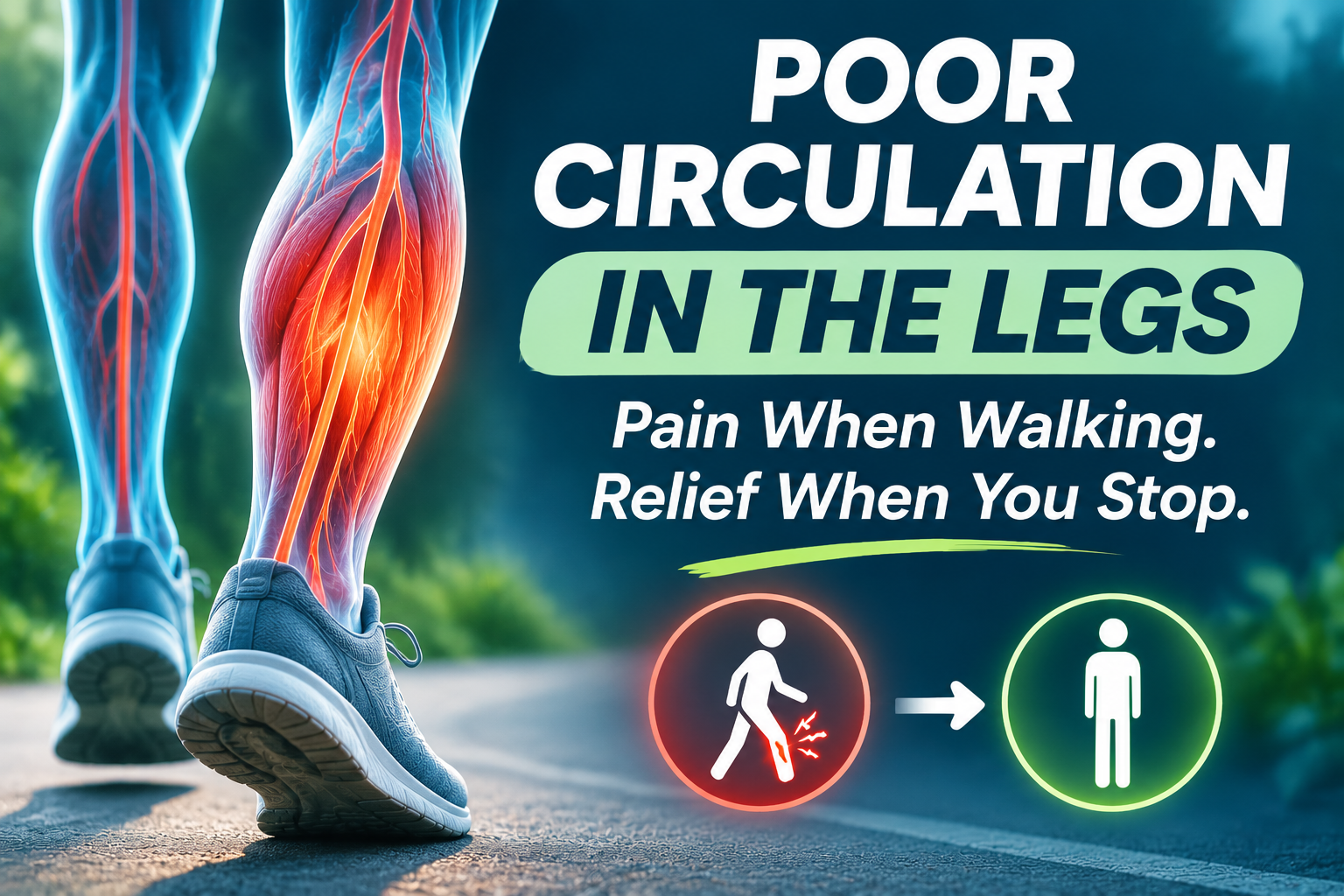
So our practical position: do not strip your nails on our account. Do tell us if your hands run cold, because that is genuinely useful information and it is a subject we have written about at length in why are my hands and feet cold.
What to wear
When people ask how to prepare for a procedure in terms of clothing, the answer is comfort, access and temperature, in that order.
- Sleeves that move. Anything that rolls above the elbow easily, or short sleeves. Tight cuffs are the usual nuisance.
- Layers. Treatment rooms tend to run cool, people often sit still for a while, and being cold is both unpleasant and unhelpful for circulation.
- Nothing you would mind creasing, and nothing that needs rearranging to sit comfortably for a stretch.
- Flat, easy shoes. You may be asked to move between rooms.
Jewellery, watches and the small stuff
Leave valuables at home rather than in a bag in an unfamiliar room — it is one less thing to track on a day when your attention is elsewhere.
Rings and watches on the arm being used should come off beforehand, which is easier at home than in a treatment chair. If a ring does not come off easily, say so when you arrive rather than struggling with it quietly.
What to bring, rather than leave
The other half of how to prepare for a procedure is the short list of things that genuinely help, and it is shorter than people expect.
- A complete list of what you take. Prescriptions, supplements, powders, drinks — all of it, with doses. People routinely leave supplements off because they do not feel like medication, and they are exactly what a clinician needs to see — Dr. Cormier wrote about the patients who arrive carrying a bag of bottles in the patients who arrive with a list. The Nerve Health Institute explains why the total matters more than most people expect in vitamin B6 toxicity and nerve symptoms.
- Your questions, written down. Appointments are where people go blank; paper fixes that.
- Something undemanding to occupy you. A podcast or a book beats a waiting room clock.
- Water, unless you have been told otherwise.
- A driver, if you have been advised not to drive afterwards. Confirm this in advance rather than discovering it on the day.
The night before
The single most useful thing you can do the night before is sleep normally, and the single most common way people prevent that is by reading about the procedure at eleven at night.
Do your reading earlier in the week, from your provider and from sources you have chosen deliberately, and then stop. Late-night searching reliably finds the most alarming account available rather than the most representative one, and it does nothing except cost you the rest you were going to turn up with.
Lay your things out before bed — list, questions, layer, water, anything you need to take with you. It takes four minutes and it removes every small decision from a morning when you would rather not be making them. Body Charger covers the wider version in how to sleep better naturally.
If your mind will not settle, that is ordinary before an appointment and worth preparing for rather than fighting. How to stay calm during a procedure has techniques that work just as well the night before as on the day.
Eating, drinking and caffeine
Follow whatever specific instructions you have been given, because they override anything general on this page. Where there are no specific instructions, a few sensible defaults apply.
Eat something ordinary beforehand unless told not to — arriving hungry for a procedure you are already nervous about is an avoidable combination. Hydrate normally through the day before, because well-hydrated veins are easier to work with and the difference is noticeable. And keep caffeine at your usual level rather than above it: extra coffee on an anxious morning tends to be felt as more anxiety rather than more alertness.
The room itself
You have more say over the sensory side of an appointment than most people assume, and asking costs nothing.
Temperature, lighting, whether you would rather watch what is happening or not, whether you want to be talked through each step or left in peace, whether you would like music or your own headphones. None of that is a difficult request and all of it changes the experience. We set out the wider version in how to stay calm during a procedure, and what to expect at an EBOO session walks through the appointment itself.
Our position, briefly
If you want how to prepare for a procedure in four lines: come unscented, for the sake of the room rather than because of anything we claim about fragrance. Keep your nails as they are. Wear sleeves that move and bring a layer. Bring your full list and your written questions.
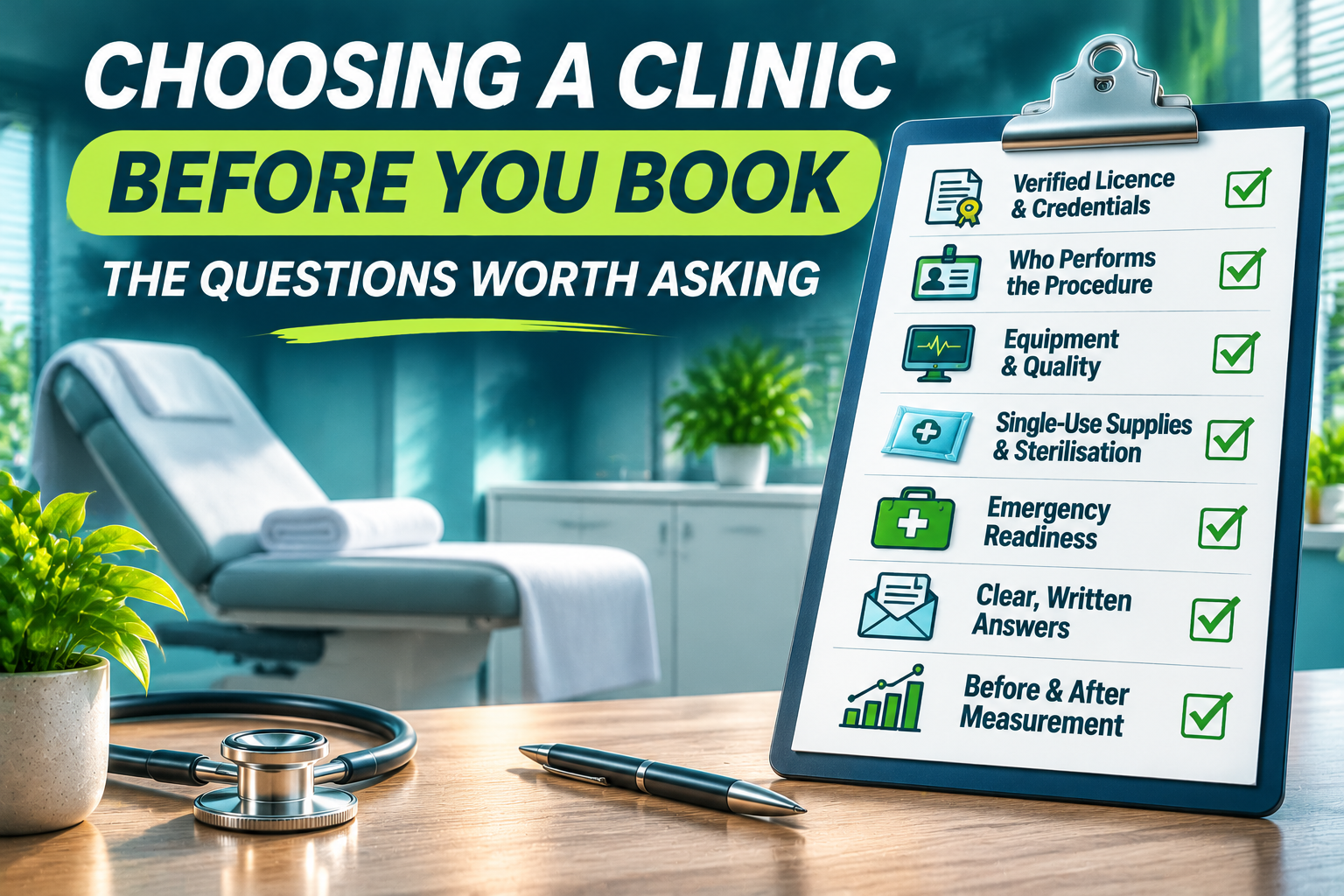
And if any instruction you have been given does not make sense to you, ask why it is there. A clinic that cannot explain its own instructions is telling you something, which is a theme we developed properly in how to check out a clinic.
Frequently asked questions
Why do clinics ask you not to wear perfume?
Mainly out of consideration for other people in a shared space. Fragranced products are a well-documented trigger for people with asthma, other airway conditions and migraine, and clinical waiting rooms contain more of those people than an average room does. Scent-free policies are common across healthcare for that reason.
Do I need to remove nail polish before a procedure?
Increasingly, no. Experimental work found polishes and acrylic nails produced no more than about one per cent variation in pulse oximetry readings compared with untreated nails, and the researchers suggested removal requirements be dropped. Follow any specific instruction your own provider gives you, but it is no longer the firm rule it once was.
What should I wear to a medical procedure?
Sleeves that roll above the elbow easily or short sleeves, a layer you can add because treatment rooms run cool, comfortable clothing you do not mind creasing, and flat shoes. Comfort, access and temperature cover almost everything.
Should I eat before a procedure?
Follow any specific instruction you have been given, as that overrides general advice. Otherwise eat something ordinary, hydrate normally the day before, and keep caffeine at your usual level rather than above it.
What should I bring with me?
A complete list of everything you take including supplements and doses, your questions written down, something undemanding to occupy you, water unless told otherwise, and a driver if you have been advised not to drive afterwards.
Any question on this list, ask us
If you are booked in and unsure about any of it, ask before the day rather than wondering on the morning. We would much rather answer a small question early than have you arrive uncertain.
Enquire with EBOO Prime — or read what is EBOO and our FAQ, which cover most of this before you need to ask.
Spark your cells to optimal longevity.
— Dr. Chris Cormier, DC
EBOO Prime