By Dr. Chris Cormier, DC
The most common question I get after an EBOO consultation is not about EBOO. It is some version of: what else should I be doing alongside it?
And more often than not, the thing people have already read about is light. Red light therapy has gone from obscure to everywhere in about five years, and anyone researching oxygen-based therapy runs into it within about ten minutes.
So it is worth answering properly. Red light therapy and oxygen therapy are aimed at the same part of the cell by genuinely different routes — which is more interesting than it sounds, and which has some practical consequences for what to do first, what to expect, and what nobody can honestly promise you about combining them.
They Converge on the Same Enzyme
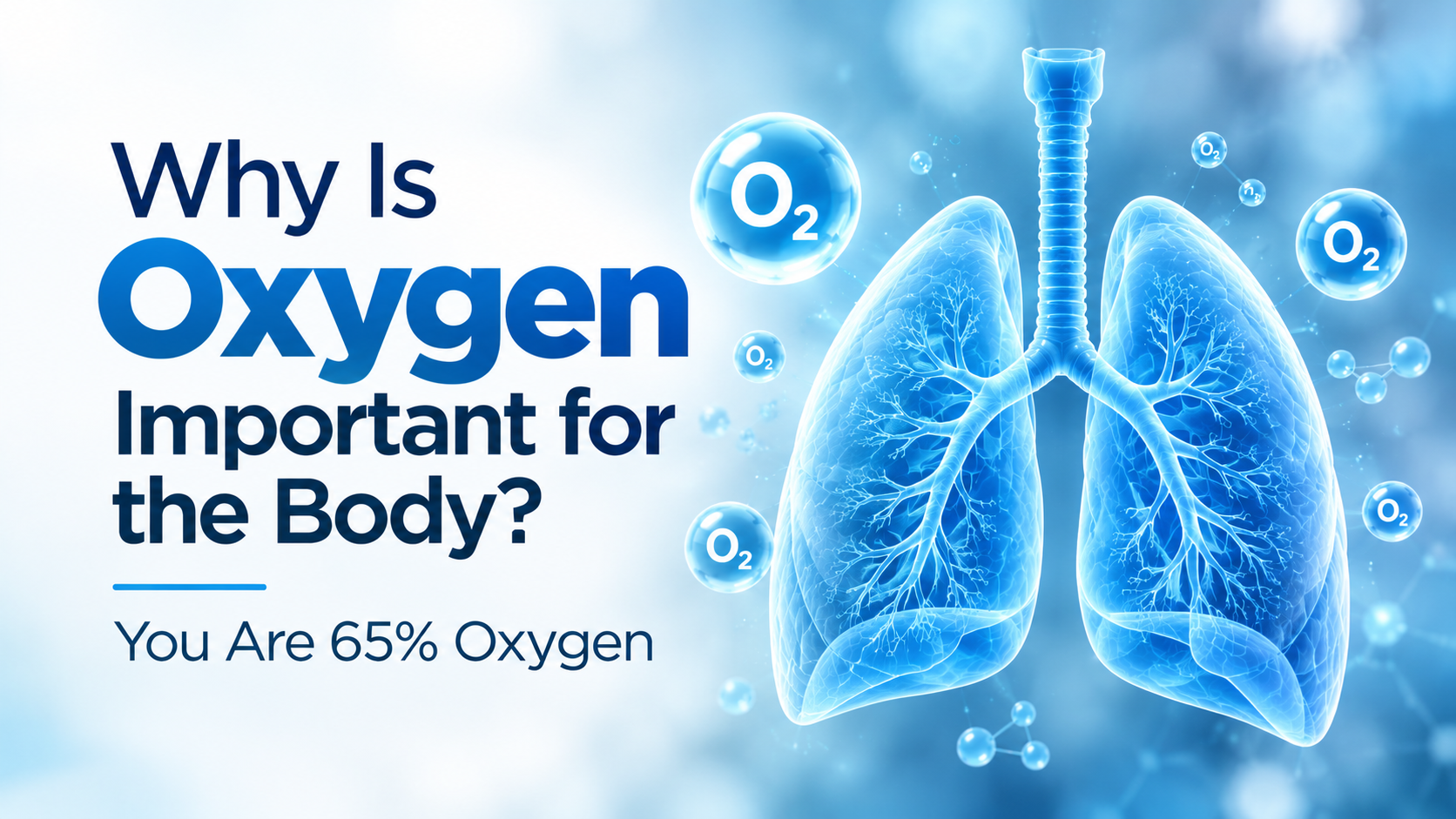
Inside every cell, mitochondria run an electron transport chain that produces energy. The last enzyme in that chain is called cytochrome c oxidase, and it is the point at which the whole process hands its electrons to oxygen.
Two things are true about that enzyme at once. It is the main absorber of red and near-infrared light in human tissue. And oxygen is its substrate — the thing it needs in order to work at all.
Which means light-based and oxygen-based approaches are not working on separate parts of the body that happen to both sound energising. They are arriving at the same enzyme from two directions: one delivering photons it can absorb, the other delivering more of the molecule it consumes.
One of the better-supported proposed mechanisms for photobiomodulation makes that overlap explicit. Nitric oxide can bind to cytochrome c oxidase and sit where oxygen should be, slowing the enzyme down. Red and near-infrared light appear to displace it, freeing the site for oxygen again. If that is what is happening, then light is partly working by improving how well the cell uses oxygen it already has.
But They Get There by Different Routes
The difference matters more than the overlap when you are deciding what to actually do.
Light is a local, surface-in intervention. Red light at around 660 nanometres works close to the surface; near-infrared at around 850 penetrates further. Either way, you are treating the tissue the light reaches. Depth is limited, and it falls away quickly with distance from the device.
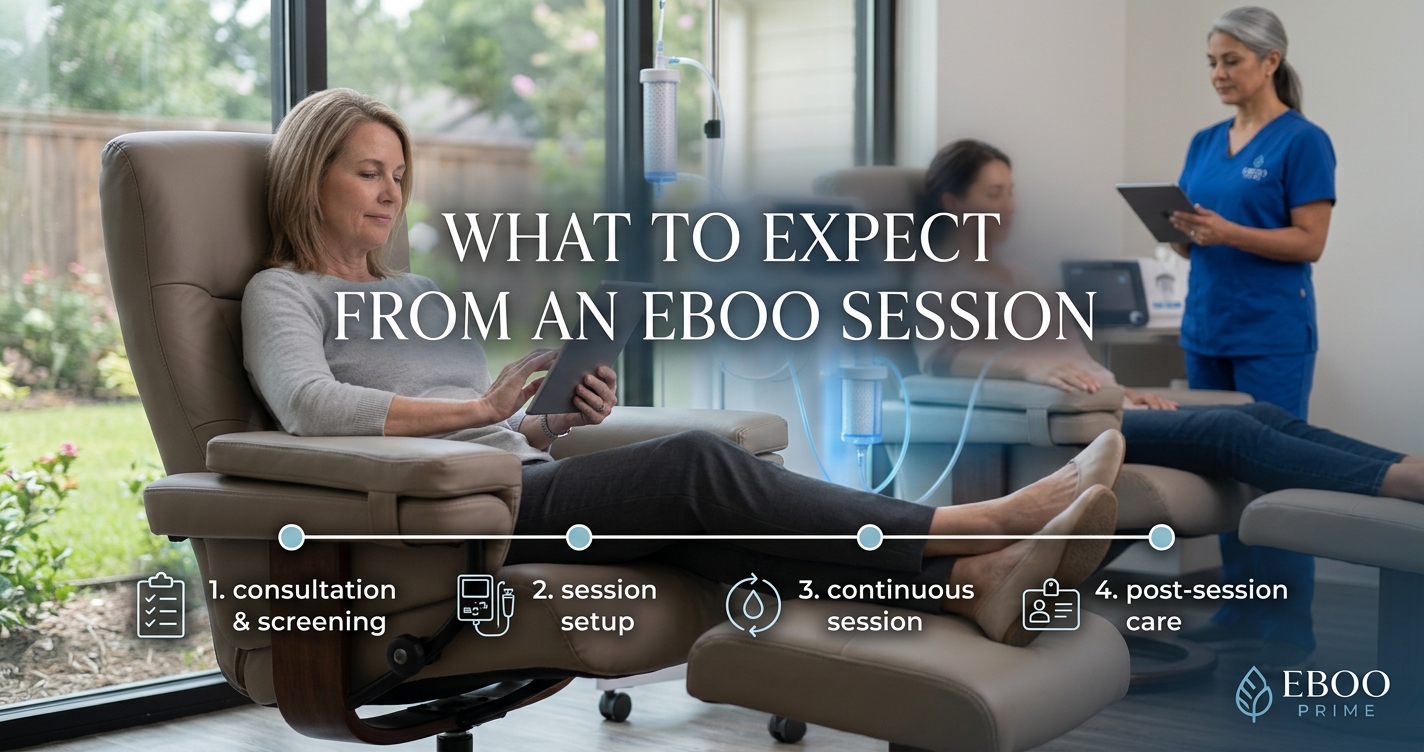
Oxygen-based therapy is a systemic, inside-out intervention. EBOO circulates your blood through filtration and oxygenation stages before returning it, so what changes is the circulating supply rather than one patch of tissue. Hyperbaric oxygen and exercise-with-oxygen approaches work on the same principle from different angles.
So they are not substitutes and they are not really competitors. A panel will not do anything meaningful for circulating oxygen supply. A session of oxygenation will not deliver photons to the enzyme. They answer different questions.
Does Combining Them Actually Do More?
Here is where I have to be straight with you, on a page that could very easily be an argument for buying both.
There is no meaningful trial evidence that combining red light therapy and oxygen therapy produces a greater effect than either on its own. The mechanistic rationale is reasonable — you can see from the section above why someone would expect the two to complement each other. But a plausible mechanism is not a demonstrated outcome, and nobody has run the studies that would settle it.
What does exist is a reasonable literature on each separately, and it is uneven in both cases. Photobiomodulation has decent support for skin and wound healing, temporary musculoskeletal pain relief and exercise recovery, and much thinner support for systemic and cognitive applications. EBOO has a small, largely European body of work on ozone therapy generally and no high-quality trials on the specific applications people usually ask us about — something we set out in more detail in our articles on EBOO and detox and oxygen therapy for concussion recovery.
Ozone therapy is also not FDA-approved for the treatment of any medical condition in the United States, and red light devices that hold FDA clearance are cleared for narrow indications such as temporary minor pain relief — clearance is not approval.
If a clinic tells you the combination is proven to be more than the sum of its parts, ask them for the trial. There is not one.
What Order Makes Sense in Practice
Given all that, here is how I actually sequence it — as clinical reasoning, which is what it is, rather than as evidence.
Foundations first, always. Sleep, hydration, breathing, daylight and movement within your capacity. These decide how much benefit anything else can produce, and they cost nothing. Someone sleeping five broken hours will get less from every intervention on this page than someone sleeping seven solid ones.
Then light, because it is cheap and low-risk. A decent home panel used consistently is accessible to almost everyone, and it carries fewer suitability hurdles than any circuit-based therapy. There is a buying and dosing guide on BodyChargers, and the short version is that irradiance at a stated distance is the only spec that matters.
Then the heavier interventions, with screening. EBOO sits here — not because it is a last resort, but because it requires bloodwork, suitability screening and a conversation about timing, which the first two do not.
People who arrive wanting to start at step three usually get less out of it than people who arrive having done steps one and two for a month. That is consistently true and it has nothing to do with the therapy itself.
Where Each One Is the Better Tool
Light is the better answer for localised work — a specific joint, an area of skin, recovery after training, something you want to treat daily without an appointment. It is also the better answer when cost and convenience are deciding factors, because it is a one-off purchase you control.
Oxygen-based work is the better answer when the question is systemic rather than local — whole-body fatigue, recovery capacity, the kind of depletion people describe after a long illness or a hard stretch of treatment. That is the ground our article on EBOO and autoimmune fatigue covers.
And for whole-body light coverage rather than a region at a time, a full-body bed is a different proposition from a panel. Sessions on the TheraLight 360 run alongside EBOO at the Nerve Health Institute, and the comparison is set out in their article on full body red light therapy.
Dose Rules Apply to Both, Differently
With light, the constraint is the biphasic dose response. Too little does nothing, the right amount produces the effect, and past a certain point the benefit flattens and can reverse. More exposure is not better, and that is the single most common mistake people make with a panel at home.
With oxygen-based therapy the constraint is not overuse so much as suitability and timing. Sessions are spaced rather than stacked, and whether you should have one at all depends on your bloodwork and what else is going on. That is why every enquiry here starts with screening rather than a booking.
Safety When You Are Doing Both
One item deserves particular attention if you are considering light and oxygen-based therapy together, because it appears on both lists and gets missed on both.
Photosensitising medication. Some antibiotics, acne medications, diuretics, certain chemotherapy agents and St John’s Wort among others. It matters for light exposure, and several of the same medications are relevant to screening on the oxygen side too. Tell every provider what you take.
For red light specifically: photosensitivity conditions such as lupus or porphyria, pregnancy (avoid the abdomen), seizure disorders where a device flickers, and never treating over a suspicious or changing skin lesion. Eye protection always.
For EBOO specifically: G6PD deficiency is an absolute contraindication, along with bleeding disorders, anticoagulant therapy without physician clearance, significant anaemia, neutropenia or current infection, recent cardiac events, uncontrolled hyperthyroidism and pregnancy. The full list is on our contraindications page.
And if you are in active cancer treatment, both the timing of EBOO and the placement of light therapy go through your oncology team first — light is never applied over a known or suspected tumour site. We cover that in EBOO therapy during cancer treatment.
The Honest Limits
Neither of these treats or cures disease. Not individually, not in combination. If you have a diagnosed condition, the physician managing it leads, and nothing here is a reason to delay or stop treatment.
The combination is not studied. The rationale is mechanistic and the sequencing above is clinical reasoning. I would rather label that accurately than let it read as something firmer.
Neither replaces the free things. Sleep, daylight, movement and hydration outperform both for most people most of the time, and they are the reason some people get a lot from these therapies and others get very little.
And neither works for everyone. Some people notice a clear change. Some notice nothing. Anyone claiming to know in advance which you will be is guessing.
The Short Version
Red light therapy and oxygen therapy meet at the same enzyme from opposite directions — photons in from the surface, substrate in through the circulation. That overlap is real and genuinely interesting.
What it is not is proof that doing both is better than doing one. Start with the foundations, add light because it is cheap and low-risk, and come to the heavier interventions with screening and realistic expectations.
If you want to talk about where you sit in that order, start with a screening conversation rather than a booking.
— Dr. Chris Cormier, DC
More on how I approach this work at drchriscormier.com. EBOO Prime sessions take place at the Nerve Health Institute in Lafayette, Louisiana.
This article is educational and is not medical advice. It does not diagnose or treat any condition. Ozone therapy is not FDA-approved for the treatment of any medical condition, and red light therapy devices cleared by the FDA are cleared for specific limited indications and are not approved to treat disease. Always consult your physician before starting a new therapy, particularly if you take photosensitising medication, are pregnant, or are in active cancer treatment.
Frequently Asked Questions
Do red light therapy and oxygen therapy work better together?
There is no trial evidence that the combination outperforms either one alone. The mechanistic rationale is reasonable — both converge on the same mitochondrial enzyme — but nobody has run the studies. Anyone telling you the stack is proven should be asked to produce the trial.
Which should I start with?
Foundations first — sleep, hydration, breathing, daylight, movement. Then red light, because it is inexpensive, low-risk and entirely under your control. Then anything requiring screening and bloodwork, such as EBOO. People who start at the expensive end usually get less from it.
Is red light therapy a substitute for oxygen therapy?
No, and the reverse is also true. Light is a local, surface-in intervention limited by penetration depth. Oxygen-based therapy is systemic and works through the circulation. They answer different questions and neither covers for the other.
Can I have both on the same day?
Usually, depending on your situation, and it is part of what screening establishes. Sessions are planned around your bloodwork, your medications and anything else you have going on rather than stacked for the sake of it.
What is the one thing most people miss?
Photosensitising medication. It appears on both the light and the oxygen-side screening lists and gets overlooked on both. Some antibiotics, acne medications, diuretics and certain chemotherapy agents are among them — tell every provider what you take.
Why does this page talk down the combination it could be selling?
Because you will work it out eventually, and it is better that you hear it here. People arriving at this topic have usually read a great deal of promotional material. Being the page that separates mechanism from evidence is worth more to us than a booking taken on a claim we could not support.
Start With a Screening Conversation
Every enquiry begins with suitability, timing and expectations — not a booking.
Enquire About EBOO Prime → ebooprime.com/enquire/
Sessions take place at the Nerve Health Institute
108 Republic Ave. Ste. B, Lafayette, LA 70508
+1 (337) 456-6555