By Dr. Chris Cormier, DC — EBOO Prime
You sit down to do one thing. Forty minutes later you have done nine other things, none of them the thing.
The usual response is to look for a discipline problem. I would look at the inputs first, because concentration is not purely a matter of character. It is a performance, and performances depend on conditions.
The organ doing the concentrating is the hungriest one you have
Start with the physical reality, because it reframes everything that follows.
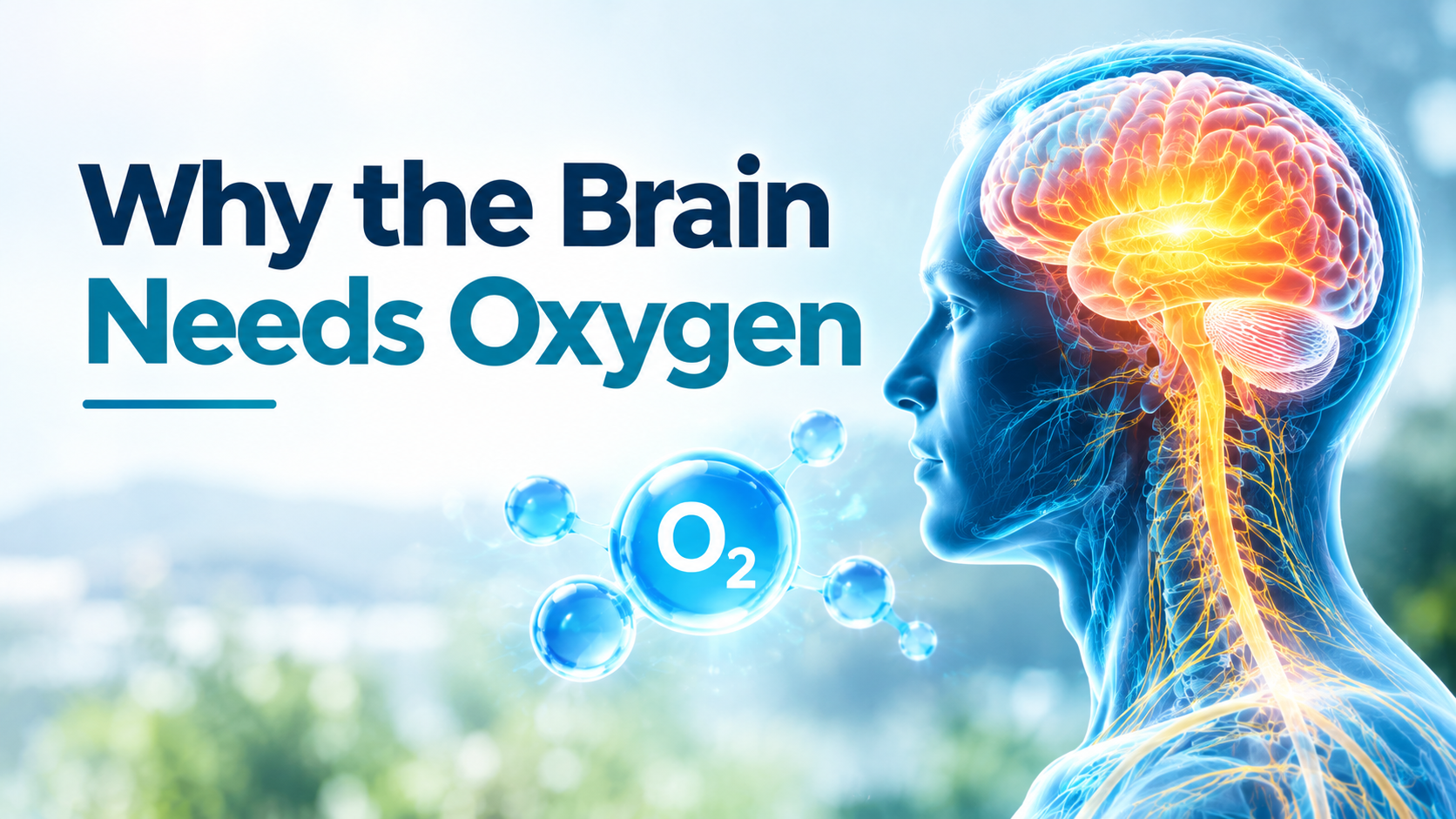
Your brain is roughly two per cent of your body weight and takes about twenty per cent of the oxygen you breathe. It stores almost nothing. It runs on continuous delivery — which means the quality of that delivery is not a background detail, it is the operating condition for everything the brain does.
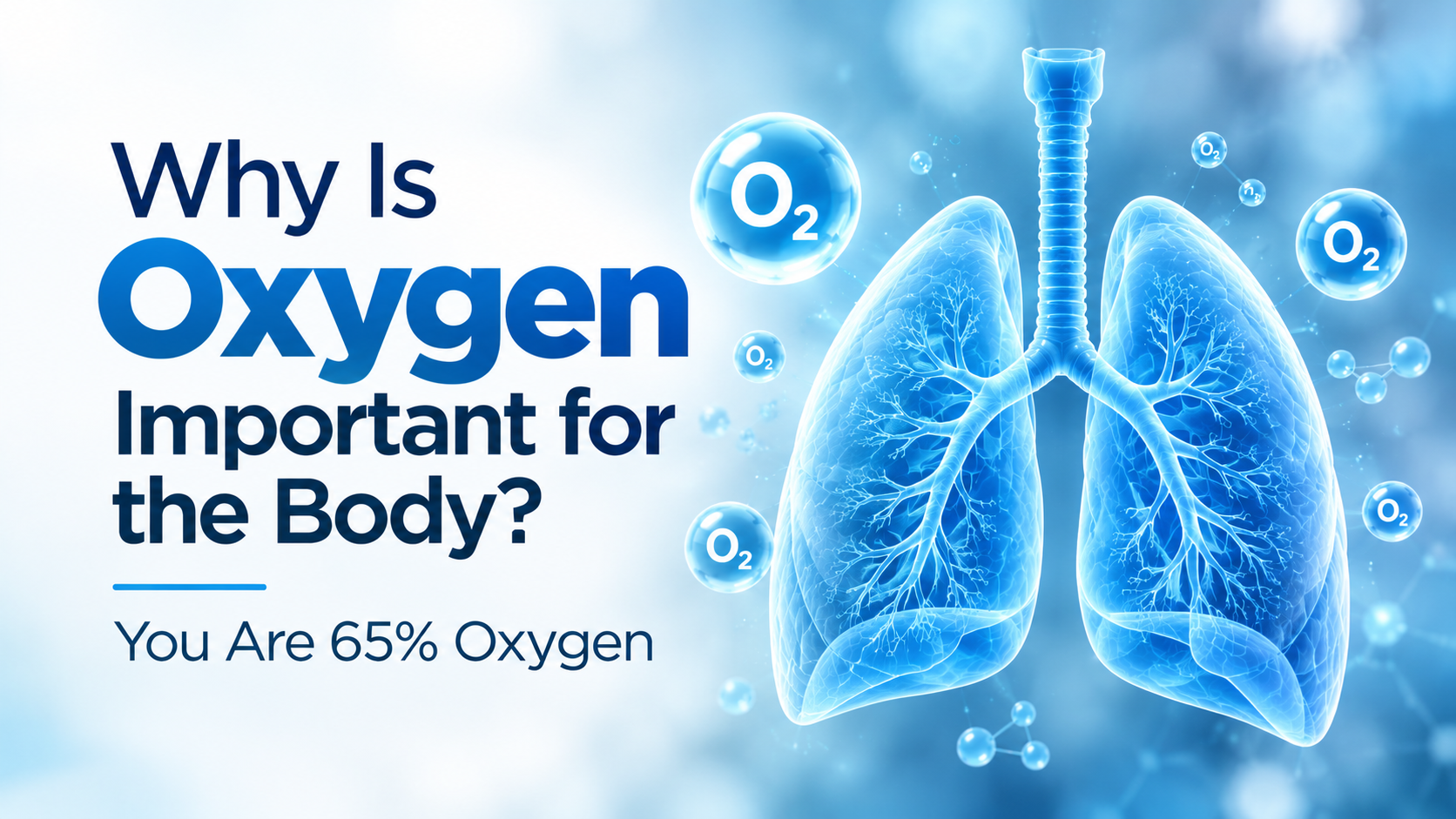
We have written the mechanism up in full in why the brain needs oxygen and why oxygen matters for the body. The short version: the thinking part of you is the part least able to coast.
First, the honest framing
Before the list, something worth saying plainly.
If difficulty concentrating is new, or comes and goes with how your week has gone, the everyday inputs below are the right place to look. If it has been there for as long as you can remember — across school, work and home, not just when you are tired — that is a different question, and it deserves a proper assessment rather than a self-managed experiment.
NIMH describes a lifelong, pervasive pattern of this kind as something that is assessed and diagnosed clinically. If that sounds like your experience, the useful next step is a clinician, not a supplement shelf. We have written about that side of it at The Nerve Health Institute, and the household version at BodyCharger.
Nothing on this page is a treatment for that, and we would not present it as one. What follows is the ordinary layer that affects concentration for everybody — including people with a diagnosis, and including people without one.
Start with how you are breathing
This is the one nobody checks, and it is sitting right there all day.
Most people, once they are busy, drift into shallow upper-chest breathing through the mouth. It is quick, it is quiet, and it is easy to do for hours without noticing. The alternative costs nothing:
- Nose, not mouth. Through the day, as the default. The nose conditions and slows the air in a way the mouth does not.
- Lower, not higher. The breath should move your lower ribs and belly, not lift your shoulders.
- Slower, with a longer exhale. Especially when you notice you have sped up.
Set something to check you twice a day for a week. You are not trying to breathe more — you are trying to breathe lower and slower. The related technique for genuinely high-pressure moments is in how to stay calm during a procedure, and it works just as well before a difficult meeting.
Then sleep, because it outranks everything else here
No input on this page competes with sleep. Concentration is one of the first things to go when sleep is short, and one of the first to come back when it is not.
The levers that matter most are environmental rather than behavioural: a cool room, properly dark, with air actually moving through it, and the lights down an hour before bed. Breathing and sleep are also connected — how you breathe at night shapes how restorative the night is, which is covered in oxygen and sleep, with the full practical build at BodyCharger.
Movement, daylight, water, meals
Four unglamorous things, listed together because they work together.
- Move before you need to concentrate, not after. Even ten minutes. Circulation responds immediately and the effect on attention is noticeable the same morning.
- Get outside early. Morning daylight sets the rhythm that decides how alert you are at two in the afternoon.
- Drink water before you are thirsty. Mild dehydration shows up as foggy thinking long before it shows up as thirst.
- Eat properly at the start of the day. Something substantial with real protein in it, at roughly the same time each day.
None of this is new information. It is listed here because knowing it and running it are different things, and most people reading this are running maybe two of the four.
Attention is a rhythm, not a flat line
One more reframe, and it is the one people find most freeing.
Nobody concentrates in a straight line. The skill is in the returning, not in never leaving.
Human attention arrives in waves. Expecting a flat three hours of it sets up a standard nobody meets, and then the not-meeting becomes its own distraction. Working in deliberate blocks with real breaks between them is not a concession — it is working with the equipment rather than against it.
A break that helps means standing up, looking at something further away than a screen, and breathing lower and slower for a minute. A break spent on a different screen is not a break; it is a change of subject.
Where circulation and oxygenation fit
We are an oxygen and circulation company, so let me be precise about what we do and do not say.
EBOO is a circulation and oxygenation procedure. We do not present it as a treatment for difficulty concentrating, and anybody who offers you one should be asked a lot of questions. What we can say is that delivery is a real part of how the body works, that it is worth understanding properly, and that whether any procedure is appropriate for you is a decision made with a clinician who has assessed you — not from a web page.
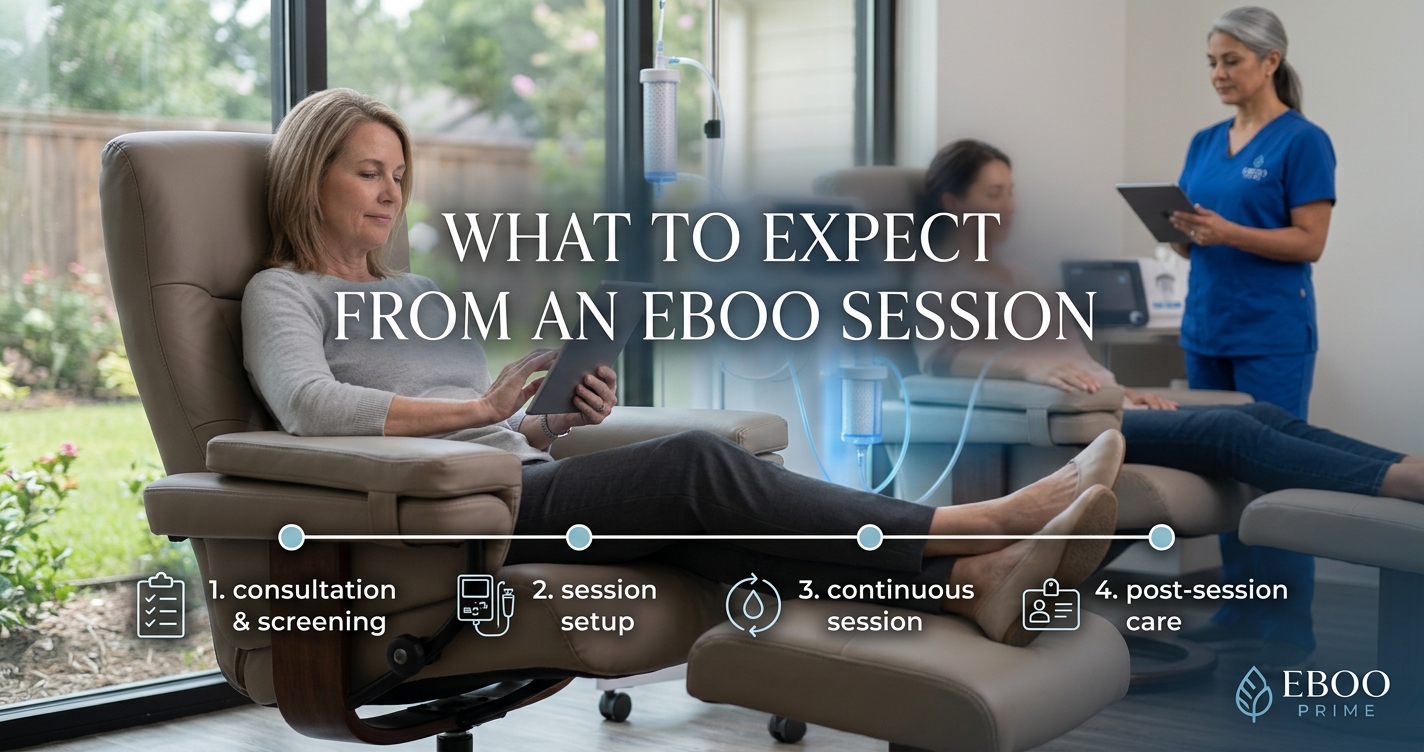
If you want to understand the procedure itself, what EBOO is, how it works and what to expect in a session cover it properly, and the FAQ answers most of what people ask next.
What we would actually recommend you do this week
In order, because order matters here.
- Fix the bedroom. Cool, dark, ventilated. Tonight, and it costs nothing.
- Check your breathing twice a day. Nose, lower, slower.
- Move and get daylight before the work starts. Ten minutes is enough to notice.
- Give it a fortnight before you conclude anything. These inputs compound rather than switch on.
- If it is lifelong rather than recent, book the assessment. That is the most useful thing on this list, and it is not something we provide.
Frequently asked questions
Why can’t I focus even when I have slept?
Sleep is the biggest single input but not the only one. Habitual shallow mouth-breathing, no morning daylight, no movement before sedentary work and mild dehydration all show up as foggy thinking. Run all of them for a fortnight before drawing a conclusion from any one of them.
Does breathing really affect concentration?
How you breathe is one of the few inputs you can change immediately and at no cost. Nose rather than mouth, lower ribs rather than shoulders, slower with a longer exhale. It is worth a week of deliberate attention precisely because it is free.
Is difficulty concentrating the same as ADHD?
No. ADHD is a clinical diagnosis made by a qualified professional, and NIMH describes it as a lifelong, pervasive pattern rather than a bad month. If difficulty concentrating has been present across every setting for as long as you can remember, a proper assessment is the right next step — not a self-managed experiment.
Does EBOO improve focus?
We do not make that claim. EBOO is a circulation and oxygenation procedure, and whether it is appropriate for any individual is a decision made with a clinician who has assessed them. Anyone promising you a concentration outcome from a procedure should be asked a great many questions.
How long before the everyday changes show?
Sleep changes can be noticeable within a few nights. Breathing, daylight and movement tend to compound over a fortnight rather than switch on. Give it two weeks of consistency before judging it.
Why does the brain need so much oxygen?
It is about two per cent of body weight and uses roughly twenty per cent of the oxygen you take in, and it stores almost none of it. It runs on continuous delivery, which is why the inputs that affect delivery affect thinking.
Start with tonight
Cool room, dark room, air moving. Tomorrow, daylight and ten minutes of movement before the work starts. Those two days cost nothing and will tell you more than another article will.
When you want to understand the oxygen side properly, start with what EBOO is, or get in touch.
Dr. Chris Cormier, DC
EBOO Prime — circulation and oxygenation
Clinic care at nervehealth.com. At-home protocols at bodycharger.com. More on how I practise at drchriscormier.com.
Spark your cells to optimal longevity.