Cold hands. Skin that mottles when you are tired. That heavy, weighted feeling in your legs at the end of a long day, as though the blood itself has slowed down.
People with fibromyalgia describe these constantly, usually as a side note to the pain rather than as part of it. They are worth paying attention to, because they point at something the pain conversation tends to skip: delivery.
Here is a look at fibromyalgia from the circulation and oxygen side, and where a therapy like EBOO fits into that picture.
Everything Your Cells Do Runs on Oxygen
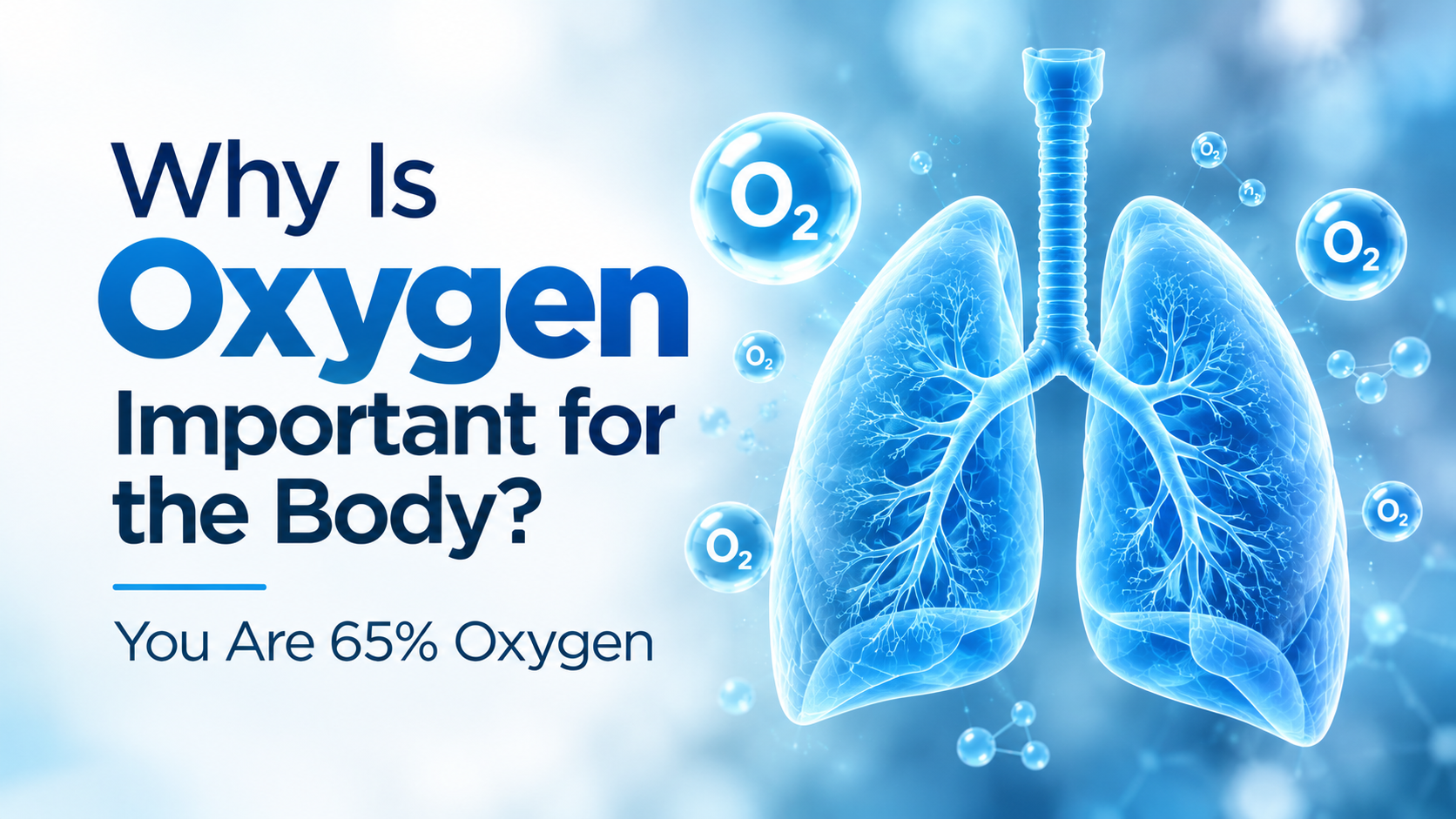
Oxygen is the first ingredient. Not one of several — the first.
Every cell in your body uses it to produce energy, and the amount of energy a cell can generate is capped by what it actually receives. Muscle tissue holding tension needs it. Repair processes need it. Clearing metabolic by-products needs it. A well-supplied cell does all of this comfortably. A cell working on a thinner supply does the same jobs more slowly and with less in reserve.
So the useful question is not only how much oxygen you take in. It is how well it reaches the tissue that needs it — and that is a delivery question, which puts blood and circulation at the centre of it.
Why Widespread Pain and Delivery Go Together
A single injury gives you a single sore area. Fibromyalgia does not work that way — it shows up in several places at once, which is one of the things that makes it so hard to explain in structural terms.
Look at it as a supply pattern and it makes more sense. Delivery is not uniform across the body. Where tissue is consistently well supplied, it does its job and recovers. Where supply runs thinner, tissue works with less margin, recovers more slowly and becomes more easily provoked.
That distribution is why the pain appears in a scattered pattern rather than one location. And it is genuinely encouraging, because supply is something you can work on — unlike a structural problem, which is fixed until someone operates on it.
What EBOO Actually Is
EBOO stands for extracorporeal blood oxygenation and ozonation. The word is intimidating and the concept is straightforward.
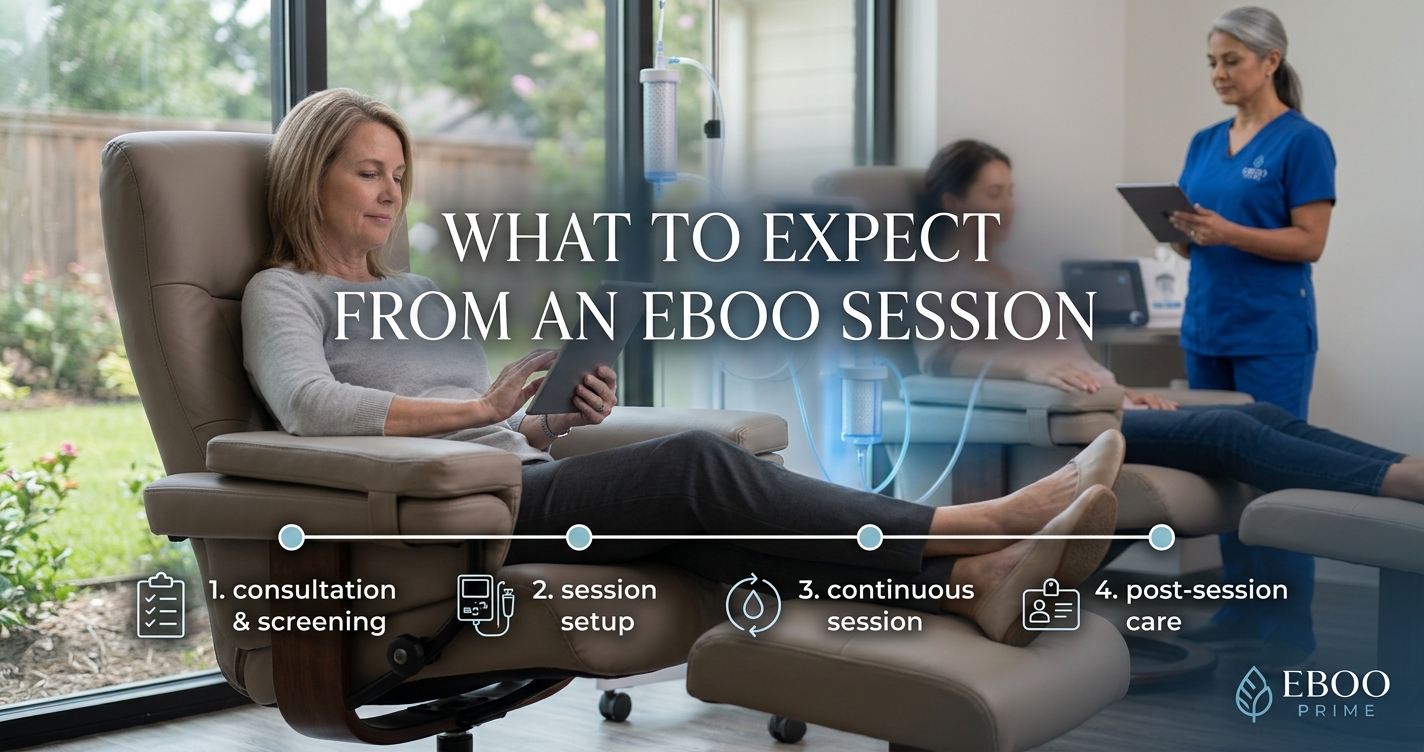
Blood is drawn from one arm, passed through a filter, oxygenated and ozonated, and returned through the other. It is a continuous circuit rather than a single withdrawal, so a substantial volume passes through the system across a session.
People come to EBOO looking for support with energy, circulation and general wellbeing. That is the honest framing — it is supportive work rather than a treatment for any diagnosed condition, and it is not a substitute for the care your doctor provides.
Why People With Fibromyalgia Ask About It
The interest usually comes from the same place. Fibromyalgia is well recognised and, at the same time, notoriously under-served — most people arrive having tried the standard options and found them partial.
What draws them to EBOO specifically is that it addresses supply rather than sensation. Rather than working on how pain is perceived, it works on the quality of what is being circulated. For someone who has spent years being offered ways to cope with symptoms, an approach aimed at the delivery side is a genuinely different proposition.
Whether it suits you is a conversation to have at consultation, where your particular picture can be looked at properly. It is not right for everybody, and you should expect an honest answer either way.
What a Session Involves
Before. A consultation and health review. Hydration in the days beforehand makes the session go more smoothly, and it is worth arriving well rested.
During. You are seated, with a line in each arm. Sessions typically run around an hour. Most people read, listen to something, or simply rest.
After. Take the rest of the day gently, keep hydrating, and let your body settle. Plenty of people go back to ordinary activity the same day, but it is worth leaving room in case you would rather not.
Frequency and course length depend on your situation, and that is decided with you rather than for you.
🎥 Watch the Conversation
Dr. Chris talks through the cellular picture in his own words — why oxygen sits at the top of the list, and how supportive work is structured.
Straight Answers, Because You Deserve Them
You deserve clarity, so here it is.
Every person is different and your results will be your own. What we can give you is an honest view of what is achievable in your case, and a clear sense of whether this is a good fit for you.
This works alongside the care you already have. Your doctor or rheumatologist stays exactly where they are, prescribed medication stays with them, and if you are on a physical therapy or exercise programme, keep going with it — it all works together.
What People Notice
Reports vary, and this builds rather than arrives. The things that come up most often:
Warmth. Hands and feet feeling less cold, which people often mention before anything else.
Energy that lasts longer. Not a surge — more usable hours before the tank empties.
Easier recovery. Getting back to baseline more quickly after a demanding day.
Clearer thinking. Frequently mentioned by people whose head had felt cloudy for a long time.
Nobody experiences all of it, and it is rarely a straight line. But those are the changes people tend to describe first.
Questions People Ask
Does EBOO treat fibromyalgia?
No, and we will not describe it that way. It is supportive work aimed at oxygenation and circulation. Diagnosing and treating fibromyalgia sits with your doctor, and this fits alongside that.
Why would oxygen matter for pain?
Because everything your cells do to function and recover runs on it. Tissue that is well supplied works with more margin than tissue that is not, and margin is exactly what tends to be missing in fibromyalgia.
Is it uncomfortable?
Most people find it straightforward — comparable to giving blood, with a line in each arm. You are seated and comfortable throughout.
How many sessions will I need?
It depends on your situation and is decided with you at consultation rather than set in advance.
Do I need to stop anything I am currently taking?
No. Prescribed medication stays with your prescriber, and this is designed to sit alongside your existing care.
Can I do anything at home to support this?
Yes. Hydration, breathing, gentle movement and consistent sleep all support oxygen delivery, and they cost nothing.
Where to Start
If you are living with fibromyalgia and want to look at the supply side rather than the symptom side, the useful step is a consultation — an honest look at your picture and a clear answer about whether EBOO is a fit for you.
Book a consultation at ebooprime.com
Spark your cells to optimal longevity.